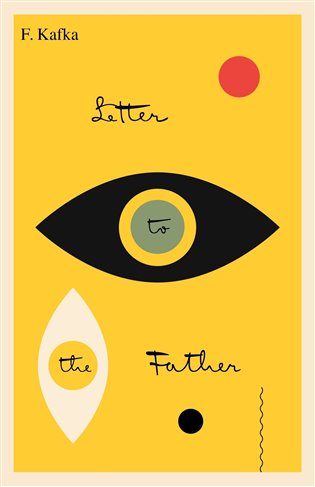
A son's poignant letter to his father--from the author of The Metamorphosis and The Trial, and one of the most important writers of the twentieth century.
| Vaše cena |
377,00 Kč |
| Vaše cena bez DPH |
377,00 Kč |
| |
| Dostupnost |
Skladem
3 ks
|
|
Odesíláme
v úterý
20.10.
|
Podrobný popis
A son's poignant letter to his father--from the author of The Metamorphosis and The Trial, and one of the most important writers of the twentieth century. Bilingual edition. Franz Kafka wrote this letter to his father, Hermann Kafka, in November 1919. Max Brod, Kafka's literary executor, relates that Kafka actually gave the letter to his mother to hand to his father, hoping it might renew a relationship that had lost itself in tension and frustration on both sides. But Kafka's probing of the deep flaw in their relationship spared neither his father nor himself. He could not help seeing the failure of communication between father and son as another moment in the larger existential predicament depicted in so much of his work. Probably realizing the futility of her son's gesture, Julie Kafka did not deliver the letter but instead returned it to its author. Review "This is the closest we have to Kafka's memoirs, a story of mutual misunderstanding and alienation, charted in a series of evocatively sketched scenes.... For all its power of psychological analysis, the tone is rarely self-pitying but almost forensically detached.... The fact that Kafka nearly always gives his father the benefit of the doubt makes his accusations all the more devastating." --The Times Literary Supplement "Kafka's principal attempt at self-clarification is also one of the great confessions of literature." --The New York Times Book Review About the Author FRANZ KAFKAwas born in Prague in 1883 and died of tuberculosis in a sanatorium near Vienna in 1924. After earning a law degree in 1906, he worked for most of his adult life at the Worker's Accident Insurance Institute in Prague. Only a small portion of Kafka's writings were published during his lifetime. He left instructions for his friend and literary executor Max Brod to destroy all of his unpublished work after his death, instructions Brod famously ignored.
Parametry
Autor:
Franz Kafka
Bezpečnostní informace
Seznam varování o bezpečnosti knih vychází z požadavků nařízení (EU) 2023/988 o obecné bezpečnosti výrobků (GPSR):
1. Riziko poranění:
a) Zkontrolujte knihu z hlediska ostrých hran nebo sponek, které mohou způsobit poranění. b) Dávejte pozor na obaly z tvrdého papíru, které mohou mít ostré rohy. 2. Nebezpečí požáru:
a) Uchovávejte knihy mimo dosah zdrojů tepla a ohně. b) Vyhněte se ukládání knih na místech vystavených přímému slunečnímu záření, abyste zabránili vznícení. 3. Nebezpečí pro zdraví:
a) Dlouhodobé čtení může vést k únavě zraku, bolestem hlavy a problémům s koncentrací. b) Zajistěte při čtení dostatečné osvětlení, abyste snížili únavu zraku. c) Při čtení pravidelně dělejte přestávky, abyste si uvolnili oči a uvolnili svaly. 4. Nebezpečí pro duševní zdraví:
a) Knihy z některých kategorií mohou obsahovat kontroverzní nebo neslučitelný obsah. Před přečtením si přečtěte názory ostatních čtenářů. b) Intenzivní vstup do světa fantasy, sci-fi nebo hororu může vést k odtržení od reality a problémům s odlišením fikce od reálného světa. c) Obsah některých knih (násilí, krutost, drastické scény) může negativně ovlivnit emocionální zdraví, způsobit stres, úzkost a dokonce i depresi. 5. Nebezpečí pro děti:
a) Malé děti mohou vkládat knihy do úst, což může vést k udušení nebo spolknutí malých prvků. b) Dohlížejte na děti při čtení knih a ujistěte se, že je nevkládají do úst. c) Obsah obsažený v knihách může být vzhledem ke své problematice (násilí, erotika apod.) nevhodný pro děti a mládež. ). Vždy zkontrolujte věkové označení a přizpůsobte čtení věku a zralosti dítěte. 6. Udržování knih v dobrém stavu:
a) Uchovávejte knihy na suchém a čistém místě, abyste zabránili vzniku plísní a poškození způsobenému vlhkostí. b) Vyhněte se ukládání knih na místech vystavených extrémním teplotám a vlhkosti. c) Pravidelně čistěte knihy od prachu a nečistot, abyste zachovali jejich vzhled a trvanlivost. 7. Zdroje informací:
a) Ověřte si důvěryhodnost informací obsažených v knize, zejména pokud je používáte pro vzdělávací nebo profesní účely. b) Věnujte pozornost datu vydání, protože znalosti v některých oblastech se rychle deaktualizují. c) Při používání odkazů nebo internetových zdrojů uvedených v knize buďte opatrní a dodržujte pravidla bezpečnosti na síti. 8. Autorská práva:
a) Dodržujte autorská práva obsahu zpřístupněného v knize.