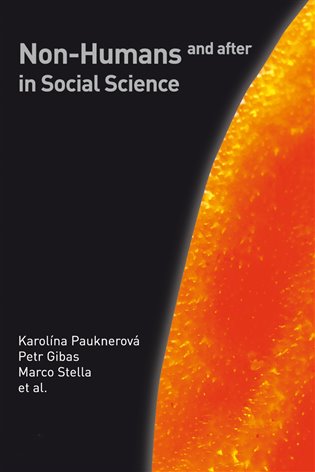
This book is the third in a series exploring the potential of non-humans to illustrate and inspire an approach in which the pre-established boundaries of scholarly thought and practice blur so that new …
| Vaše cena |
246,00 Kč |
| Vaše cena bez DPH |
246,00 Kč |
| |
| Dostupnost |
Skladem
2 ks
|
|
Odesíláme
ve středu
16.9.
|
Podrobný popis
This book is the third in a series exploring the potential of non-humans to illustrate and inspire an approach in which the pre-established boundaries of scholarly thought and practice blur so that new directions in theory and research can emerge. Humans and non-humans are co-present in the world. For long, they have seemed and been thought of as an ontological binary opposition with humans elevated above the rest. As this book series testifies, recently, there has been a move in social sciences towards non-humans as they provide new prisms to look at issues that have for long been of interest to social sciences.This growing interest in non-humans shatters the ontological assumptions about the difference between humans and the rest of life forms as well as reappraises the relationship between humans (and non-humans) and inanimate objects. What the individual chapters in this book as well as the volume as such elaborate on is the fact that humans and various non-humans are not as separate as they have been believed to be; they sometimes encounter and even co-create each other to the extent where the delimitations start to disappear.
Non-humans differ from humans in many respects. However, at certain moments, the difference does not necessarily have to be what governs the relationship between them. To understand what happens when humans and non-humans encounter each other needs a more nuanced perspective. This is what the individual chapters in this book hope to achieve. What the book calls for and the chapters exemplify is a need of a close reading of how the co-presence of diverse entities, humans as well as various non-humans, influences their presence and the boundaries between them at given moments of sharing, forming and inhabiting the world.
Parametry
Autor:
Petr Gibas, Marco Stella
Bezpečnostní informace
Seznam varování o bezpečnosti knih vychází z požadavků nařízení (EU) 2023/988 o obecné bezpečnosti výrobků (GPSR):
1. Riziko poranění:
a) Zkontrolujte knihu z hlediska ostrých hran nebo sponek, které mohou způsobit poranění. b) Dávejte pozor na obaly z tvrdého papíru, které mohou mít ostré rohy. 2. Nebezpečí požáru:
a) Uchovávejte knihy mimo dosah zdrojů tepla a ohně. b) Vyhněte se ukládání knih na místech vystavených přímému slunečnímu záření, abyste zabránili vznícení. 3. Nebezpečí pro zdraví:
a) Dlouhodobé čtení může vést k únavě zraku, bolestem hlavy a problémům s koncentrací. b) Zajistěte při čtení dostatečné osvětlení, abyste snížili únavu zraku. c) Při čtení pravidelně dělejte přestávky, abyste si uvolnili oči a uvolnili svaly. 4. Nebezpečí pro duševní zdraví:
a) Knihy z některých kategorií mohou obsahovat kontroverzní nebo neslučitelný obsah. Před přečtením si přečtěte názory ostatních čtenářů. b) Intenzivní vstup do světa fantasy, sci-fi nebo hororu může vést k odtržení od reality a problémům s odlišením fikce od reálného světa. c) Obsah některých knih (násilí, krutost, drastické scény) může negativně ovlivnit emocionální zdraví, způsobit stres, úzkost a dokonce i depresi. 5. Nebezpečí pro děti:
a) Malé děti mohou vkládat knihy do úst, což může vést k udušení nebo spolknutí malých prvků. b) Dohlížejte na děti při čtení knih a ujistěte se, že je nevkládají do úst. c) Obsah obsažený v knihách může být vzhledem ke své problematice (násilí, erotika apod.) nevhodný pro děti a mládež. ). Vždy zkontrolujte věkové označení a přizpůsobte čtení věku a zralosti dítěte. 6. Udržování knih v dobrém stavu:
a) Uchovávejte knihy na suchém a čistém místě, abyste zabránili vzniku plísní a poškození způsobenému vlhkostí. b) Vyhněte se ukládání knih na místech vystavených extrémním teplotám a vlhkosti. c) Pravidelně čistěte knihy od prachu a nečistot, abyste zachovali jejich vzhled a trvanlivost. 7. Zdroje informací:
a) Ověřte si důvěryhodnost informací obsažených v knize, zejména pokud je používáte pro vzdělávací nebo profesní účely. b) Věnujte pozornost datu vydání, protože znalosti v některých oblastech se rychle deaktualizují. c) Při používání odkazů nebo internetových zdrojů uvedených v knize buďte opatrní a dodržujte pravidla bezpečnosti na síti. 8. Autorská práva:
a) Dodržujte autorská práva obsahu zpřístupněného v knize.