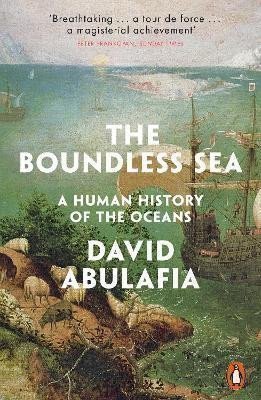
For most of human history, the seas and oceans have been the main means of long-distance trade and communication between peoples - for the spread of ideas and religion as well as commerce.
| Vaše cena |
554,20 Kč |
| Vaše cena bez DPH |
554,20 Kč |
| |
| Dostupnost |
Skladem
4 ks
|
|
Odesíláme
v pondělí
27.7.
|
Výprodej zboží této kategorie - slevy až 80%
Podrobný popis
For most of human history, the seas and oceans have been the main means of long-distance trade and communication between peoples - for the spread of ideas and religion as well as commerce. This book traces the history of human movement and interaction around and across the world's greatest bodies of water, charting our relationship with the oceans from the time of the first voyagers. David Abulafia begins with the earliest of seafaring societies - the Polynesians of the Pacific, the possessors of intuitive navigational skills long before the invention of the compass, who by the first century were trading between their far-flung islands. By the seventh century, trading routes stretched from the coasts of Arabia and Africa to southern China and Japan, bringing together the Indian Ocean and the western Pacific and linking half the world through the international spice trade. In the Atlantic, centuries before the little kingdom of Portugal carved out its powerful, seaborne empire, many peoples sought new lands across the sea - the Bretons, the Frisians and, most notably, the Vikings, now known to be the first Europeans to reach North America. As Portuguese supremacy dwindled in the late sixteenth century, the Spanish, the Dutch and then the British each successively ruled the waves. Following merchants, explorers, pirates, cartographers and travellers in their quests for spices, gold, ivory, slaves, lands for settlement and knowledge of what lay beyond, Abulafia has created an extraordinary narrative of humanity and the oceans. From the earliest forays of peoples in hand-hewn canoes through uncharted waters to the routes now taken daily by supertankers in their thousands, The Boundless Sea shows how maritime networks came to form a continuum of interaction and interconnection across the globe: 90 per cent of global trade is still conducted by sea. This is history of the grandest scale and scope, and from a bracingly different perspective - not, as in most global histories, from the land, but from the boundless seas.
Bezpečnostní informace
Seznam varování o bezpečnosti knih vychází z požadavků nařízení (EU) 2023/988 o obecné bezpečnosti výrobků (GPSR):
1. Riziko poranění:
a) Zkontrolujte knihu z hlediska ostrých hran nebo sponek, které mohou způsobit poranění. b) Dávejte pozor na obaly z tvrdého papíru, které mohou mít ostré rohy. 2. Nebezpečí požáru:
a) Uchovávejte knihy mimo dosah zdrojů tepla a ohně. b) Vyhněte se ukládání knih na místech vystavených přímému slunečnímu záření, abyste zabránili vznícení. 3. Nebezpečí pro zdraví:
a) Dlouhodobé čtení může vést k únavě zraku, bolestem hlavy a problémům s koncentrací. b) Zajistěte při čtení dostatečné osvětlení, abyste snížili únavu zraku. c) Při čtení pravidelně dělejte přestávky, abyste si uvolnili oči a uvolnili svaly. 4. Nebezpečí pro duševní zdraví:
a) Knihy z některých kategorií mohou obsahovat kontroverzní nebo neslučitelný obsah. Před přečtením si přečtěte názory ostatních čtenářů. b) Intenzivní vstup do světa fantasy, sci-fi nebo hororu může vést k odtržení od reality a problémům s odlišením fikce od reálného světa. c) Obsah některých knih (násilí, krutost, drastické scény) může negativně ovlivnit emocionální zdraví, způsobit stres, úzkost a dokonce i depresi. 5. Nebezpečí pro děti:
a) Malé děti mohou vkládat knihy do úst, což může vést k udušení nebo spolknutí malých prvků. b) Dohlížejte na děti při čtení knih a ujistěte se, že je nevkládají do úst. c) Obsah obsažený v knihách může být vzhledem ke své problematice (násilí, erotika apod.) nevhodný pro děti a mládež. ). Vždy zkontrolujte věkové označení a přizpůsobte čtení věku a zralosti dítěte. 6. Udržování knih v dobrém stavu:
a) Uchovávejte knihy na suchém a čistém místě, abyste zabránili vzniku plísní a poškození způsobenému vlhkostí. b) Vyhněte se ukládání knih na místech vystavených extrémním teplotám a vlhkosti. c) Pravidelně čistěte knihy od prachu a nečistot, abyste zachovali jejich vzhled a trvanlivost. 7. Zdroje informací:
a) Ověřte si důvěryhodnost informací obsažených v knize, zejména pokud je používáte pro vzdělávací nebo profesní účely. b) Věnujte pozornost datu vydání, protože znalosti v některých oblastech se rychle deaktualizují. c) Při používání odkazů nebo internetových zdrojů uvedených v knize buďte opatrní a dodržujte pravidla bezpečnosti na síti. 8. Autorská práva:
a) Dodržujte autorská práva obsahu zpřístupněného v knize.