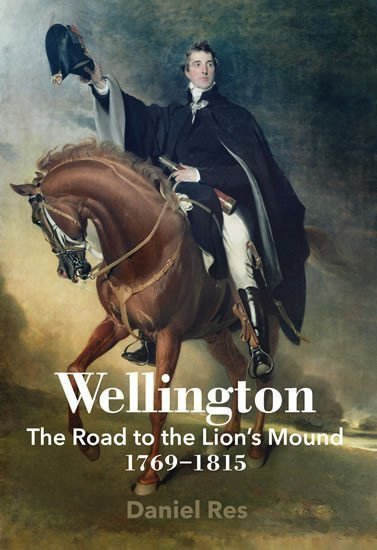
Wellington – The Road to the Lion’s Mound is the first volume of the story of the 1st Duke of Wellington, the man who defeated Napoleon at Waterloo and became a celebrated hero not only in Britain and …
| Vaše cena |
739,60 Kč |
| Vaše cena bez DPH |
739,60 Kč |
| |
| Dostupnost |
Skladem
3 ks
|
|
Odesíláme
v úterý
6.10.
|
Výprodej zboží této kategorie - slevy až 80%
Podrobný popis
Wellington – The Road to the Lion’s Mound is the first volume of the story of the 1st Duke of Wellington, the man who defeated Napoleon at Waterloo and became a celebrated hero not only in Britain and Europe, but throughout the world. Daniel Res tells the gripping tale of Wellington’s exploits, giving the book an almost novel-like readability. In it we discover the story of Wellington’s youth in Ireland, his shaky beginnings in politics and the army, his first military success in India and his crucial engagements with Napoleonic France on the Iberian Peninsula as he fights his way from there to the south of France in 1814 – all events which culminate in the Battle of Waterloo the following year. Res presents Wellington not only as an ingenious commander, but also as a sensitive man, one often shaken by the realities and horrors of war. Wellington is revealed to be an excellent horseman, a passionate reader, a gentleman, an impeccable organizer, perfectionist and workaholic, as well as being a Conservative politician with a notably British sense of humour. Th e author also recounts something of Wellington’s wooing of and marriage to Catherine ‘Kitty’ Pakenham, a story likened by con-temporaries to Odysseus and Penelope. Th is provides the reader with insight into Wellington’s development from a ‘dreamy, idle and shy lad’, an often lovelorn and unrestrained youth, to a man of principle with strong personal convictions and values. Th e book’s title –Wellington – The Road to the Lion’s Mound– has been inspired by the monument that today stands on the battlefield of Waterloo and symbolizes the Duke’s personal journey.‘The Duke of Wellington is not just a figure belonging to British history but also one belonging to that of the whole of Europe. In this imaginative work, Czech historian, Daniel Res, both reminds us of this fact and gives us a wealth of insight into the rich vein of material on the Napoleonic Wars to be found in the archives of mittel Europa.’ Prof Charles Esdaile, University of Liverpool, author of Napoleon, France and Waterloo: The Eagle Rejected, and Napoleon’s Wars: An International History, 1803–1815
Bezpečnostní informace
Seznam varování o bezpečnosti knih vychází z požadavků nařízení (EU) 2023/988 o obecné bezpečnosti výrobků (GPSR):
1. Riziko poranění:
a) Zkontrolujte knihu z hlediska ostrých hran nebo sponek, které mohou způsobit poranění. b) Dávejte pozor na obaly z tvrdého papíru, které mohou mít ostré rohy. 2. Nebezpečí požáru:
a) Uchovávejte knihy mimo dosah zdrojů tepla a ohně. b) Vyhněte se ukládání knih na místech vystavených přímému slunečnímu záření, abyste zabránili vznícení. 3. Nebezpečí pro zdraví:
a) Dlouhodobé čtení může vést k únavě zraku, bolestem hlavy a problémům s koncentrací. b) Zajistěte při čtení dostatečné osvětlení, abyste snížili únavu zraku. c) Při čtení pravidelně dělejte přestávky, abyste si uvolnili oči a uvolnili svaly. 4. Nebezpečí pro duševní zdraví:
a) Knihy z některých kategorií mohou obsahovat kontroverzní nebo neslučitelný obsah. Před přečtením si přečtěte názory ostatních čtenářů. b) Intenzivní vstup do světa fantasy, sci-fi nebo hororu může vést k odtržení od reality a problémům s odlišením fikce od reálného světa. c) Obsah některých knih (násilí, krutost, drastické scény) může negativně ovlivnit emocionální zdraví, způsobit stres, úzkost a dokonce i depresi. 5. Nebezpečí pro děti:
a) Malé děti mohou vkládat knihy do úst, což může vést k udušení nebo spolknutí malých prvků. b) Dohlížejte na děti při čtení knih a ujistěte se, že je nevkládají do úst. c) Obsah obsažený v knihách může být vzhledem ke své problematice (násilí, erotika apod.) nevhodný pro děti a mládež. ). Vždy zkontrolujte věkové označení a přizpůsobte čtení věku a zralosti dítěte. 6. Udržování knih v dobrém stavu:
a) Uchovávejte knihy na suchém a čistém místě, abyste zabránili vzniku plísní a poškození způsobenému vlhkostí. b) Vyhněte se ukládání knih na místech vystavených extrémním teplotám a vlhkosti. c) Pravidelně čistěte knihy od prachu a nečistot, abyste zachovali jejich vzhled a trvanlivost. 7. Zdroje informací:
a) Ověřte si důvěryhodnost informací obsažených v knize, zejména pokud je používáte pro vzdělávací nebo profesní účely. b) Věnujte pozornost datu vydání, protože znalosti v některých oblastech se rychle deaktualizují. c) Při používání odkazů nebo internetových zdrojů uvedených v knize buďte opatrní a dodržujte pravidla bezpečnosti na síti. 8. Autorská práva:
a) Dodržujte autorská práva obsahu zpřístupněného v knize.